
Researching higher-dose thiamine supplementation to improve cognitive development in young children in Cambodia.
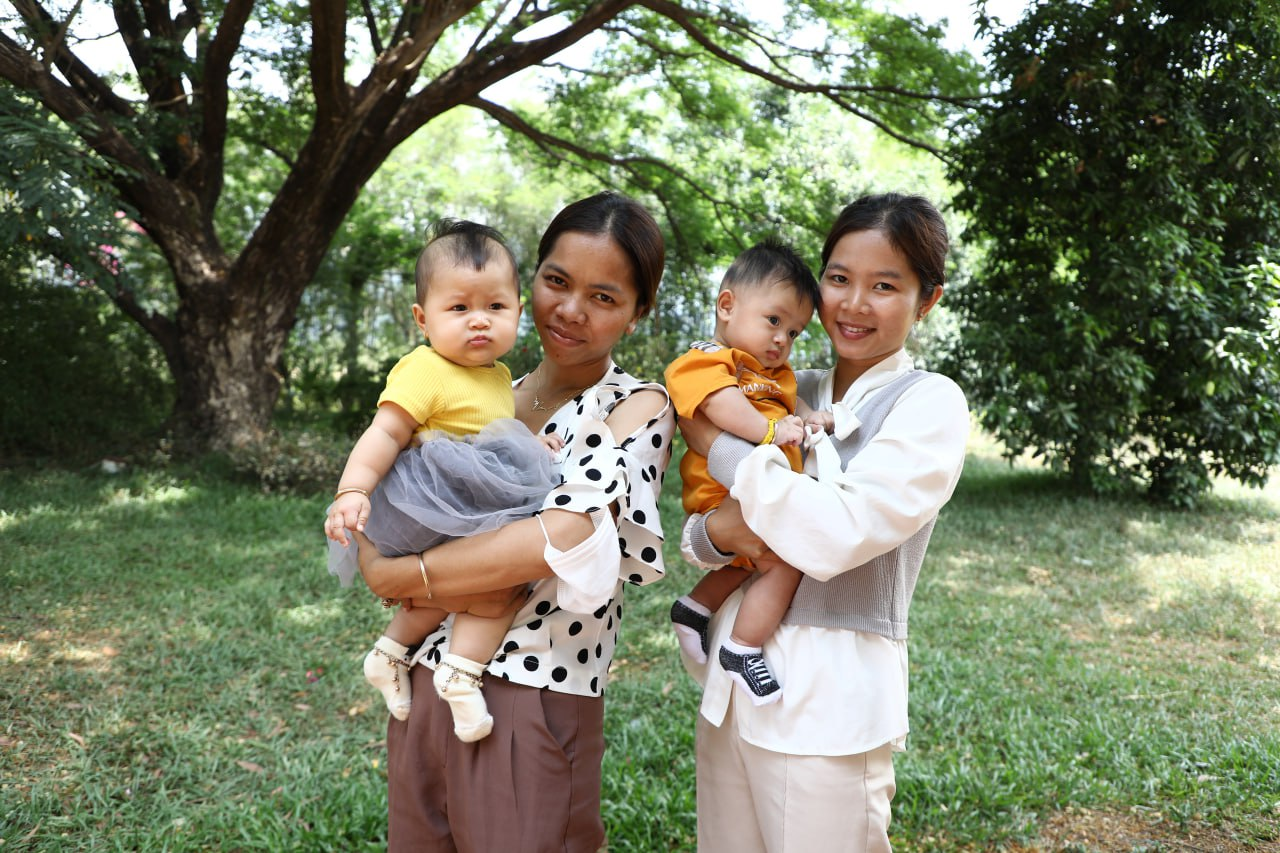
Photo Credit: HKIntl Cambodia
We partnered with Helen Keller Intl on a three-year grant to test whether higher-dose, longer-duration thiamine supplementation during pregnancy and early childhood can improve cognitive development in young children in Cambodia.
Grant Description
Thiamine (vitamin B1) deficiency is common in low- and middle-income countries with rice-based diets, including Cambodia, where an estimated 78% of women of reproductive age and 64% of children ages 6 to 24 months have sub-optimal thiamine status.
With Cambodia's Ministry of Health, Ministry of Planning, Mount Saint Vincent University, and the University of Oregon, Helen Keller will conduct a randomized controlled trial testing whether raising the standard antenatal dose of thiamine — currently 1.4 milligrams, provided only during pregnancy — to 10 milligrams, continued through early childhood, affects infant cognitive development. The trial seeks to enroll 2,040 mother-infant pairs in Kampong Thom province, measuring cognitive performance at 18 months.
This grant reflects WAM Foundation's interest in funding rigorous research where the cost of generating evidence is low relative to the potential policy impact.
This research is designed to address key evidence gaps and inform future maternal and child nutrition policies. Because thiamine can be added to existing supplements at a low additional cost, the intervention could be scaled without new distribution infrastructure.